

Start Your Own Flour Mill
Food processing can never be out of business. And one of the ways you could enter that never-ending cycle is by supplying flour for making bread, biscuits, and pasta.
Find out the process involved in turning wheat into flour. This knowledge could help you start a business of flour milling.
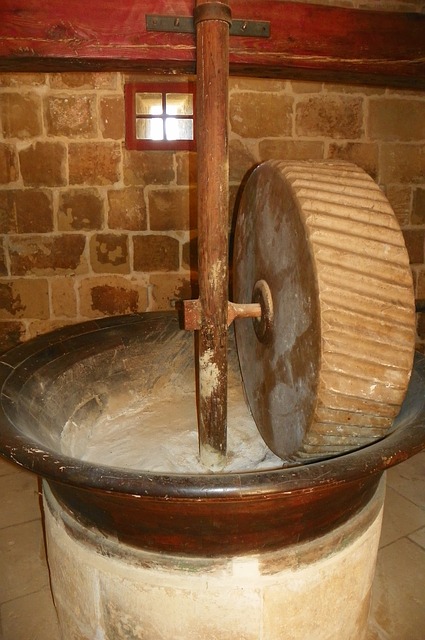
Kitchen-Scale Flour Milling
If yours is a simple flour milling business, you can mill flour that comes to you. Manual and electric grain mills for use in the kitchen, which can also be used as a flour mill, are available at $100 to $700 inclusive of shipping. Two of the features that affect prices are the material of the mill, the noise level, and their adjustability. Those made of stainless steel operate with a low noise level, have lower heat production, generate less dust in the air, and can be adjusted for fine or coarser output cost more. Metal and plastic materials are preferred over wood. The recommended milling rate is 40 lbs. of fine flour per hour.
Commercial-Scale Flour Milling
But if you intend to supply graded flour, you must take care of wheat cleaning and conditioning before milling. Wheat cleaning involves grading the wheat according to specific characteristics and blending some grades to obtain the desired flour. Depending on its protein content, wheat is classified as soft wheat, medium-hard wheat, and hard wheat.
Similar Articles
The type of wheat will determine whether it would be used for bread, biscuits, pasta, or something else. Wheat conditioning involves adding water and allowing the prepared grain to stand for several hours. Then the actual milling process produces flour, wheat germ, and bran.
The flour is then bagged and usually stored for several days to age before delivery to makers of biscuits, pasta, crackers, and other baked goods. You can also sell the bran and wheat germ to breakfast cereals or animal feed makers.
If yours is a commercial-scale business, you would be dealing with wheat breeders or farmers, wheat traders, suppliers, and the end-users of flour. High-level processing would involve more sophisticated inspection and equipment (such as magnetic separator, aspirator, de-stoner, disc separator, scourer, and sifters) and specialists, like a chemist. It would also involve larger spaces and infrastructure.
Flour Milling Business Requirements
Before starting a flour milling business, check the regulation of your town or state to determine what permits and certificates you need to secure. The dust particle generated from the milling and the risk of an explosion caused by the suspension of flour dust in the air is of concern in this process. This is not a concern for smaller quantities, but for larger volumes, care should be taken to prevent this from happening.
Here is a Video on Modern Automated Flour Mill
Recommended Articles
- What You Need to Know About a Maize Milling Business
Venturing into a maize milling business is easy, especially if you have the know-how, capital, and equipment. To secure your success in this business, keep everything on track. - How to Start a Pulp Mill
You can operate your own full-blown paper business. Start your own pulp mill business by learning about the ways on how you can succeed in this type of industry.
1045 Comments
Comment
Categories
- Franchise Opportunities
- Wholesale Business Opportunities
- Small Manufacturing Business
- Farming Business Ideas
- Unique Business Opportunities
- Shop Business Ideas
- Small Business Opportunities
- Startup Company Ideas
- Home Based Business Opportunity
- Rural Business Opportunities
- Tips for Buying and Selling
- Starting Rental Business
- Ideas for Small Business
- Free Business Ideas
- Internet Business Ideas
- Store Business Opportunities
- Entrepreneur Business Idea
- Retail Store Ideas
- Service Business Ideas
- Advice for Small Business
- Financing a Small Business
- Restaurant Business Opportunities
- Small Business Articles
- Business Marketing and Advertising
- Repair Business Opportunity
- Professional Career Opportunities
- Business Insurance Information
- Instructor Guides

1. what is the type of machinery required for this type of business?
2. what is scope of this business?
3. i want mainly to know about wheat flour?
4. is there any long or difficult process to start flour business?
5. with a capital of rs 10-15 lakh it is sufficient?
6. my location is dewas and neighborhood places?
7. in how much quantity how much flour can be made?
8. what is the cost of getting it packed in a jute bag(50 kg)?
1. can it help in FMCG market ?
2. how i can make contract to fmcg companies ?
1- what is the basic qualification/experience to start the business?
2- how much is total expenditure for it?
3- government rules & regulation?
4- is it there will be some source for loan?
5- how is the market condition for flour millers because of shortage of wheat?
so please tell me details how the process to start the new business of flour mill. Thank you, shrikant, +91 9881672810, shriraj@yaoo.com
1. Complete design & layout of flour mill.
2. Best Quality and Production .
3. Proper Guidance in selecting the best of all machines available in the market.
4. Well experienced team of technicians to ensure the smooth running of plant.
5. 24X7 Service Support.
For more information please feel free to contact: Mr. Mangu Sharma ( Head) (+91-9873452121). Thanks Amit Sharma (+91-9818439192) Project Engineer Jai Hanuman Flour Mills Consultant. Faridabad. India.
Amit Sharma (amitsharma@consultant.com)
Milling Technologist
Amit Sharma (amitsharma@consultant.com)
Milling Technologist
- minimum investment
- government rules and regulations
- type of machines
- is the location suitable for this business?
- minimum requirement of land according to government norms
1) How much space does it required?
2) How much is cost of flour mill machine?